A stone carried on the path can represent a hope or a burden. Explore the history of the Señor de Huanca, the September pilgrimage, and how to visit its Cusco shrine respectfully.
The main day of the Señor de Huanca festival is September 14. Each year, pilgrims travel to the shrine in San Salvador, Calca Province, to pray before an image of Christ painted directly on rock. For many, the experience begins well before they enter the building: it begins on the path toward Mount Pachatusan, carrying an intention and walking alongside other devotees.
One moving custom is to carry a stone and then use it to build a miniature house or another small figure near the shrine, representing a personal wish. The testimony shared with GT Peru Travel also remembers the stone as a symbol of sorrow or a burden. The official Mincetur festival record documents both meanings: carrying stones as penance and assembling figures with them on arrival.

Contents
- What is the Señor de Huanca?
- The history behind the devotion
- When is the Señor de Huanca festival?
- The tradition of stones and miniature houses
- Why Huanca is a pilgrimage shrine
- The walking pilgrimage route
- How to reach the shrine from Cusco by road
- Practical advice for a respectful visit
- A recognized cultural tradition
- A journey inward as well as onward
What is the Señor de Huanca?
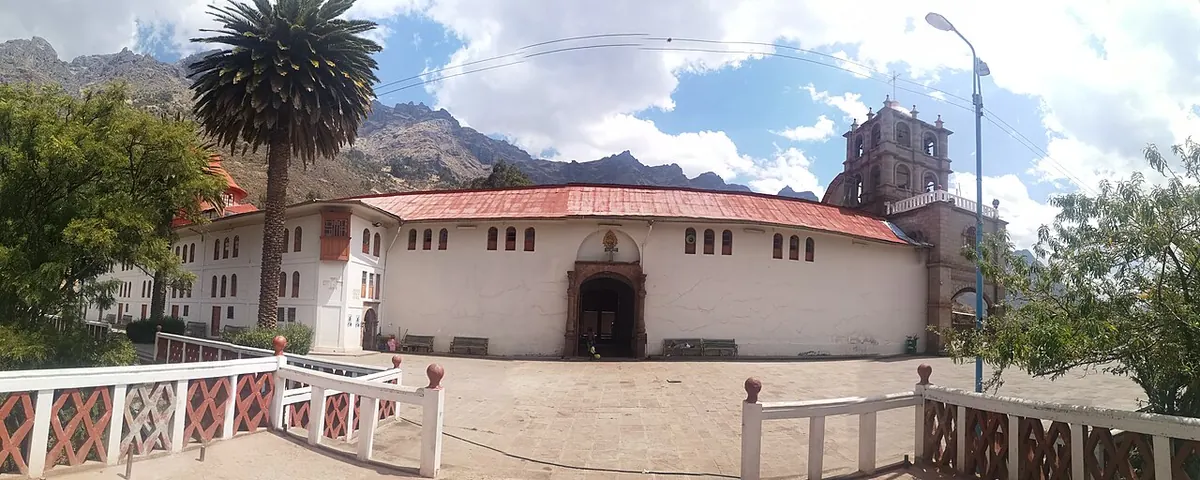
The Señor de Huanca is a devotion to Christ centered on a shrine in the foothills of Mount Pachatusan, in San Salvador District near Cusco. Its principal image is painted onto the rock itself, rather than on canvas or carved as a statue. Mincetur places the shrine at approximately 3,220 meters (10,564 feet) above sea level; some travel guides give different rounded elevations, so the site record is the more precise reference.
Devotees also call the image the “Heavenly Physician” or “Physician of the Poor.” These are devotional names associated with stories of comfort and healing, not promises of medical recovery. A visit can be a time for prayer, thanksgiving and reconciliation, while professional care remains essential when someone is ill.
The history behind the devotion
A traditional account dates the beginnings of the devotion to 1675. It tells of Diego Quispe, who fled mistreatment at a mine, hid in a cave and experienced an encounter with Christ. According to the story, the image was later painted on the rock. Mincetur's festival inventory records this narrative as part of local religious memory. It should be understood as a faith tradition, not as a historical event independently verified in every detail.
The present complex developed much later. Mincetur's shrine inventory dates the building process to 1931–1965. The centuries-old devotion and the age of the current buildings are therefore different parts of the story.

When is the Señor de Huanca festival?
The central date is September 14. Novenas and other religious activities usually begin earlier in the month. One of the busiest walking pilgrimages takes place during the night of September 13, with many people reaching the shrine at dawn on the 14th. PromPerú's September 2026 guide confirms this general sequence.
Specific Mass times, transport arrangements and access rules can change each year. If you want to attend a particular ceremony, check the current program with religious or local authorities before leaving. The shrine also receives visitors outside the festival period, when the atmosphere is usually quieter.
The tradition of stones and miniature houses
The text that inspired this article recalls pilgrims collecting a stone as they passed through San Salvador and carrying it toward the shrine. On arrival, some formed miniature houses from stones and other materials. A little house could stand for the hope of a home, a family project or another wish entrusted to the Señor de Huanca.
The same stone could also express penance: its physical weight gave form to a worry, guilt or grief that the walker hoped to place in God's hands. Mincetur records that some devotees still carry stones and build figures using them and eucalyptus branches. It would therefore be misleading to say the custom has vanished; the testimony is an invitation to rediscover its meaning in a time when many people arrive by vehicle.
Neither faith nor respect for the custom requires anyone to carry a heavy stone. If you take part, follow community and shrine guidance, do not remove material from protected areas, and do not leave structures where they are prohibited. The meaning lies in the intention, not in the weight.
Why Huanca is a pilgrimage shrine
Under canon 1230 of the Catholic Church's Code of Canon Law, a shrine is a sacred place to which many faithful travel for a particular reason of devotion. At Huanca, that purpose may be expressed in personal prayer, promises, the Eucharist or sacramental reconciliation. It is more than a stop for photographs.
The title “Heavenly Physician” voices religious trust, but a pilgrimage is not a demand for a guaranteed miracle. A person may arrive with a request and leave with a different kind of answer—or find comfort in silence, community and reflection. The original testimony calls attention to this inward part of the journey.
The walking pilgrimage route
The best-known route starts in San Jerónimo, passes near Huaccoto and Huancapata, climbs toward Pachatusan and descends to the shrine. Mincetur estimates five to seven hours for the traditional walk, but the actual duration depends on pace, elevation, weather and crowds. PromPerú also mentions the Atasqasa pass.
The memory of collecting a stone near San Salvador does not mean that everyone starts walking there: pilgrims join the journey at different points. For an overnight walk, go with others, take a light, water, broken-in footwear and warm layers. Stay on the marked route. If altitude or physical condition makes the hike unsuitable, reaching the shrine by road can still be a meaningful visit.

How to reach the shrine from Cusco by road
If you are not walking, use authorized transport or a vehicle via Huacarpay and Lucre toward San Salvador. PromPerú gives a reference of approximately 55.3 km and 1 hour 30 minutes by road from Cusco; there is also an alternative via Písac. These are planning estimates, not guaranteed journey times, especially around the main festival day.
Confirm the departure point, fare and return arrangements before boarding. Traffic, controls and temporary access changes are possible during the celebration, so check local information and leave plenty of time. If Andean religious traditions interest you, read about the Virgen de Cocharcas in Apurímac and the Qoyllur Rit’i pilgrimage; each has its own context and calendar.
Practical advice for a respectful visit
- Check the current program and access conditions; do not rely on last year's timetable.
- Acclimatize and assess your ability to walk for hours above 3,000 meters.
- Wear sturdy shoes and layers, carry water and light food, and protect yourself from the sun.
- Respect services, queues and prayer areas; ask before photographing individuals.
- Carry out your rubbish and do not disturb the path or natural areas for an offering.
- For children, older travelers or visitors with limited mobility, choose suitable transport and a flexible plan.
A recognized cultural tradition
In 2014, Peru's Ministry of Culture declared the festival and pilgrimage Cultural Heritage of the Nation. This recognizes the celebration and the practices transmitted by its participants; it does not mean that every stone in the surrounding landscape is individually protected by the same resolution.
The pilgrimage brings together Catholic prayer and long-standing Andean relationships with the landscape. Understanding it means listening to the people who sustain it, not treating it as a tourist curiosity. A photo can preserve a view; considerate behavior helps preserve the tradition's meaning.
A journey inward as well as onward
At Huanca, one small stone may stand for a hoped-for home, gratitude or something difficult to carry. It is a simple image for a deeper experience: walking with an intention, recognizing what weighs on you and arriving ready to begin again.
Not every visitor will make the same journey. Some walk for hours; others come by road. Both can pause to pray or reflect without turning the shrine into just another stop on an itinerary.
Sources, update and image credits
Prepared on September 13, 2026 from a text shared with GT Peru Travel and checked against Mincetur's festival and shrine records, PromPerú's 2026 guide, the Ministry of Culture's declaration and canon 1230. All documentary photographs come from Wikimedia Commons; their authors and licenses appear beneath each image. Confirm current schedules and access conditions before traveling.
The shrine photograph in the page header, taken in 2019, is by Chalisimo5, CC BY-SA 4.0; it was resized and converted to WebP.
GT Peru Travel Editorial Team
Culture and travel · GT Peru Travel · Cusco, Peru
Prepared from a shared testimony and checked against official tourism, heritage and Church sources.