In Cusco, the first days of November bring together family remembrance and the work of bakers and cooks. If you will be in the city, this guide explains the tradition without treating annual customs as a confirmed program of 2026 events.
At a glance: Sunday, November 1, 2026, is All Saints’ Day and a national public holiday in Peru; November 2 is associated with remembering the faithful departed. In Cusco, t’anta wawa, horse-shaped bread and dishes such as roast pork are part of the season’s customs. Check local organizers for the dates and hours of any fairs.
What happens on November 1 and 2?
November 1 is All Saints’ Day. In 2026 it falls on a Sunday and appears on Peru’s official public-holiday calendar. November 2 is dedicated to the faithful departed; for many families it is a day to visit and remember loved ones. The two dates are connected, but they are not a single tourist show, and every family observes them differently.
| Date | Main meaning | What a visitor may encounter |
|---|---|---|
| November 1 | All Saints’ Day | Traditional bread, seasonal food and family gatherings; some fairs are announced separately. |
| November 2 | Remembrance of the faithful departed | Flowers, offerings and family visits to places of remembrance. |
Perú Travel describes the observance and mentions Cusco’s Almudena Cemetery Museum. If you visit a church or cemetery, remember that families are gathering there to honor loved ones.
T’anta wawa: bread with a story

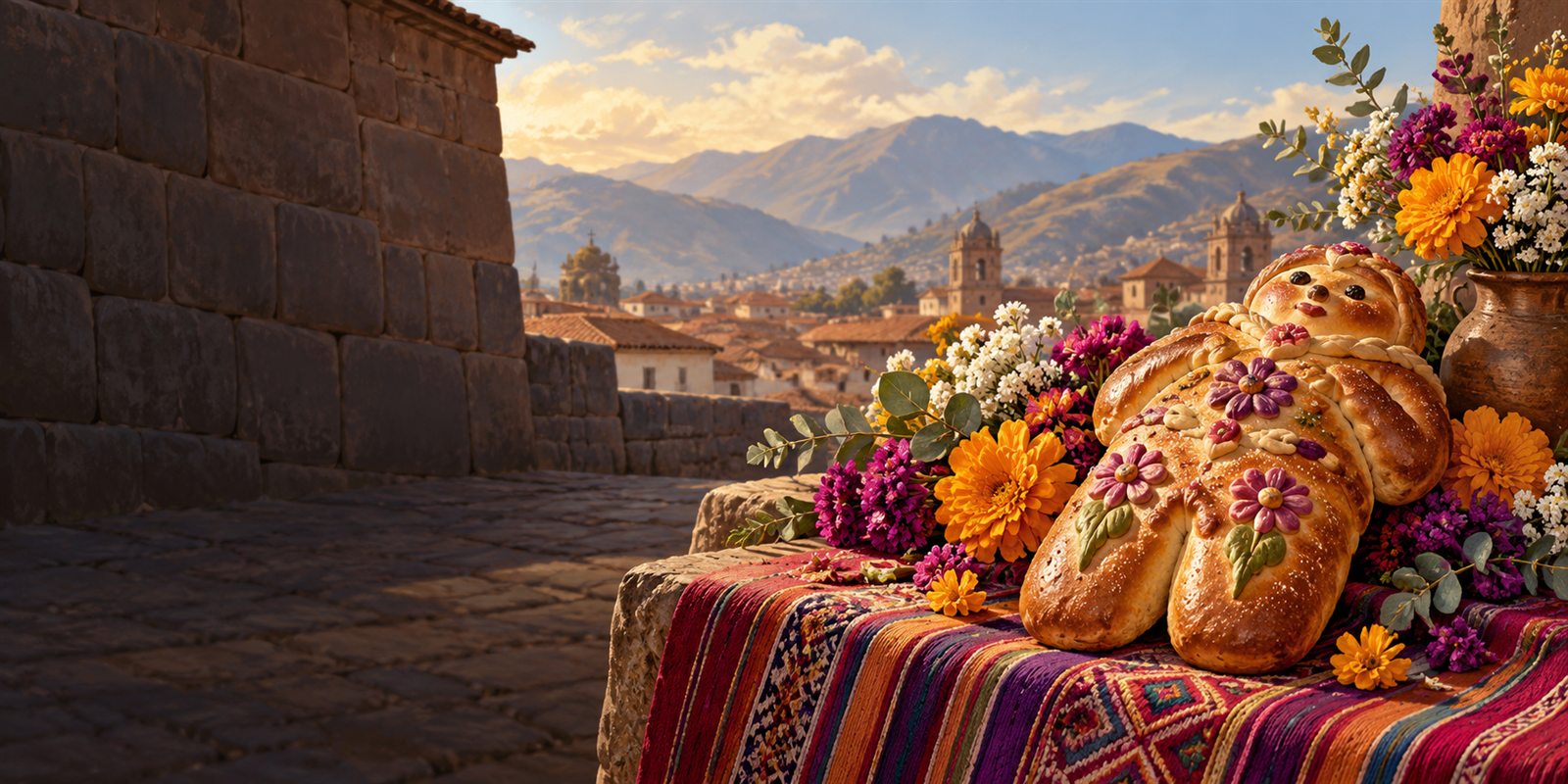
T’anta means bread and wawa means baby or child. Often shaped like a swaddled infant, this ceremonial bread expresses affection and cultural continuity. Peru’s tourism inventory documents the tradition in Oropesa, Cusco, and connects it with November 1 and 2. Bakers also make other shapes, including pan caballo (horse-shaped bread). Recipes and decoration vary by community and bakery.
Take time to appreciate the craftsmanship and, when possible, buy directly from local producers. Different sizes and designs are part of the tradition, not imperfections.
Roast pork, tamales and seasonal flavors

Cusco-style lechón (roast pork) and tamales often accompany family gatherings and food fairs around these dates. A 2025 San Jerónimo municipal account highlighted roast pork, tamales, small sweets and baby- and horse-shaped breads; San Sebastián also documented its food festival. These are examples from previous editions, not confirmed 2026 schedules.
For everyday food beyond seasonal fairs, start with our guide to Cusco’s markets. Ask about ingredients and preparation with curiosity; each family and food stall may have its own version.
How to experience the tradition in Cusco
A flexible plan works better than chasing an unverified list of events. In the morning, visit traditional bakeries or markets and look for locally made t’anta wawas. Around lunchtime, try seasonal dishes at a place that clearly displays its prices. If a municipality announces a public fair, check its date and location directly before setting out.
In previous years, districts such as San Jerónimo and San Sebastián organized activities centered on bread and roast pork. That does not guarantee an identical program in 2026. You can also enjoy a calm walk through Cusco’s historic center; if you want architectural and historical context, see our Cusco City Tour.
Visiting respectfully on days of remembrance

- Ask before photographing people, offerings or ceremonies; do not interrupt families for a picture.
- Follow the rules of churches and cemeteries, keep entrances clear and never treat places of mourning as a backdrop.
- Support local bakers, artisans and cooks, and leave public spaces clean.
- Confirm times, locations and access through official channels: a fair held in a previous year may not return in the same form.
The most meaningful way to encounter All Saints’ Day in Cusco is to observe sensitively, talk when welcomed and understand that food and remembrance belong to the same living culture.
Sources and review date
Reviewed on October 21, 2026, using Peru’s official public-holiday calendar, Perú Travel, the tourism inventory entry on t’anta wawa and municipal reports from previous celebrations. All four images in this guide are original illustrations, not photographs of 2026 events.
GT Peru Travel editorial team
Travel guides · GT Peru Travel · Cusco, Peru
Travel information checked against official sources and explained by a local team in Cusco.