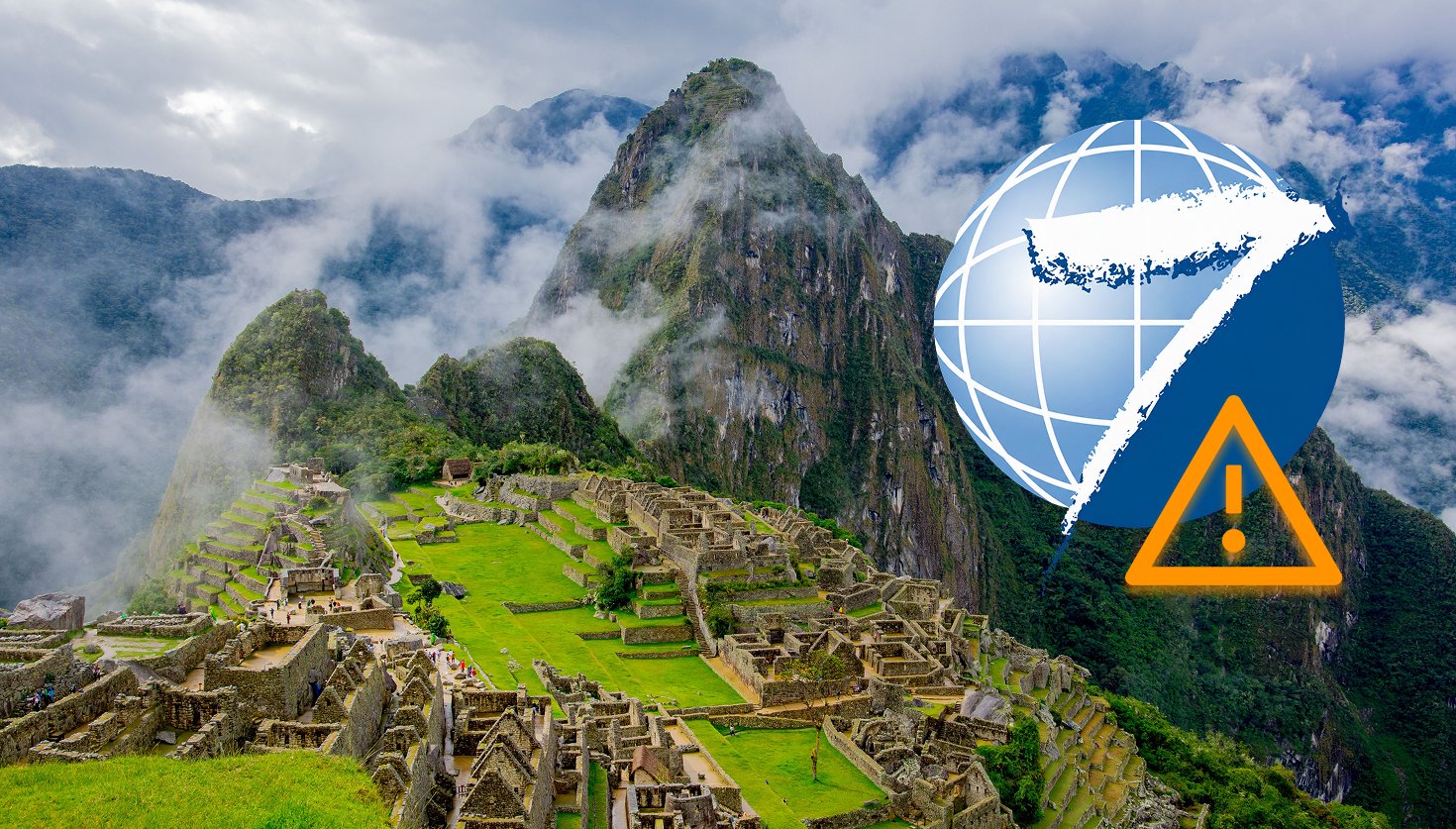
As of September 2026, Machu Picchu remains one of the New 7 Wonders of the World. The concern arose after New7Wonders publicly questioned aspects of the destination's tourism and heritage management. This debate does not mean the recognition has already been withdrawn.
Contents
- The warning that put Machu Picchu back in the spotlight
- Why could its recognition be at risk?
- What being a New 7 Wonder means
- UNESCO and New7Wonders
- Machu Picchu's current status
- What this means for travelers
- Machu Picchu remains a World Wonder
The warning that put Machu Picchu back in the spotlight
The possibility that Machu Picchu could lose its New Wonder of the World status made headlines in 2025 and drew attention again in 2026. The debate began with warnings attributed to New7Wonders about problems that, in the organization's view, could affect the credibility and sustainability of the recognition if they were not addressed.
In June 2026, El País reported renewed scrutiny of destination management, citing concerns about disorganization, conflicts, accidents, insufficient planning and a visitor experience that does not always match a site of global importance. The central issue was not the historic value of the Inca city but the way a destination under enormous tourism pressure is managed.
The distinction matters: a management warning is not a formal decision to withdraw the title. The official New7Wonders page for Machu Picchu still lists it among the New 7 Wonders of the World.
Why could Machu Picchu's recognition be at risk?

The publicly discussed risk is not related to Machu Picchu's archaeological importance. The Inca city remains one of Peru's and the world's major cultural landmarks. Concern instead focuses on whether its tourism success can be managed in an orderly, sustainable and safe way.
Tourism growth and pressure on the sanctuary
Demand for Machu Picchu is much higher than for most archaeological sites in Peru. This interest generates jobs and economic activity, but it also requires authorities to manage how many people enter, how they move through the llaqta and which areas can withstand larger flows without compromising conservation.
For 2026, Peru's Ministry of Culture set a maximum capacity of 5,600 visitors per day on specific high-demand dates. The authorized capacity may be lower outside those periods. Ministerial Resolution No. 000285-2025-MC details the applicable dates and conditions.
Tickets, circuits, transportation and access
The traveler experience involves more than entering the Inca city. It includes ticket availability, selecting a circuit, choosing a train or access route, traveling from Machu Picchu Pueblo and receiving clear information before arrival. When any part fails, visitors perceive it as a problem with the Machu Picchu experience as a whole.
Ticketing, queues, operational changes and transportation are therefore interconnected. At an internationally popular destination, coordination between services and authorities directly affects perceptions of order, safety and quality.
Conservation, planning and management continuity
Machu Picchu is both an archaeological site and a highly valuable natural environment. Protecting both requires long-term planning, investment, monitoring and institutional coordination. In March 2026, authorities approved the 2026–2031 Master Plan for the Historic Sanctuary of Machupicchu to guide integrated management.
A master plan is an important step, but implementation is the real challenge: controlling impacts, organizing flows, improving services and maintaining policies when authorities change. Much of the public criticism of the destination centers on this need for continuity.
What does being one of the New 7 Wonders of the World mean?
Machu Picchu received the recognition on July 7, 2007, when the results of a global campaign organized by New7Wonders were announced in Lisbon. More than 100 million votes were cast worldwide, and Machu Picchu joined the Great Wall of China, Petra, Chichén Itzá, Christ the Redeemer, the Colosseum and the Taj Mahal. The official 2007 declaration lists all seven.
The title was not granted by an intergovernmental body; it came from an international popular-vote initiative. Even so, its symbolic and tourism impact was enormous, strengthening Machu Picchu's international visibility and its status as a global travel icon.
Why is Machu Picchu a wonder to millions of people? Not only because of the vote. Its Inca architecture, terraces adapted to extreme geography, stonework, relationship between city and mountain and immense historical importance made it exceptional long before 2007.
UNESCO and New7Wonders: two different recognitions

A common misconception is to confuse the New Wonder title with World Heritage status. They are separate recognitions managed by different organizations.
| New7Wonders | UNESCO |
|---|---|
| New Wonder of the World | World Heritage property |
| International popular vote in 2007 | Inscribed as a mixed cultural and natural property in 1983 |
| Recognition promoted by an international initiative | Recognition under the World Heritage Convention |
UNESCO continues to list the Historic Sanctuary of Machu Picchu as World Heritage for both cultural and natural values. In 2026, the World Heritage Committee again reviewed its state of conservation and asked Peru to continue improving management and planning through Decision 48 COM 7B.65.
Machu Picchu's current status
As of September 2026, New7Wonders has not withdrawn Machu Picchu's recognition. It remains on the organization's official page as one of the New 7 Wonders. Claims that Machu Picchu is no longer a World Wonder are therefore inaccurate.
There is, however, public pressure to improve destination management. The warning calls attention to long-standing problems that could damage Machu Picchu's international reputation if they are not addressed consistently.
There is also no publicly announced automatic expulsion process, withdrawal date or replacement site. The current situation is a warning and an active debate, not an official removal.
What does this mean for people planning to visit?

The practical conclusion is simple: Machu Picchu remains open and continues to receive visitors. The controversy over its Wonder title does not mean the sanctuary is closing or that tours have been generally canceled.
Careful planning is still essential. Capacity is limited, circuits follow specific routes and peak dates can sell out early. Review our guide to Machu Picchu circuits and purchase admission through official channels before traveling.
Visiting also involves shared responsibility. Following the circuits and staff instructions, avoiding behavior that damages the heritage and choosing formal services all help Machu Picchu welcome travelers without compromising what makes it exceptional.
Machu Picchu remains a Wonder of the World
The answer to the headline question is currently clear: Machu Picchu remains one of the New 7 Wonders of the World. The warning does not mean the title has disappeared; it means destination management faces growing international scrutiny.
The real challenge is not defending a label. It is ensuring that conservation, visitor experience and administration match the site's importance. Machu Picchu did not become a global symbol solely because of a vote; its historical, cultural and natural value exists independently of the title. That is precisely why protecting it matters more than any recognition.
GT Peru Travel editorial team
News and travel · GT Peru Travel · Cusco, Peru
Information verified by GT Peru Travel's local team in Cusco and updated using official sources.