A well-packed backpack is not the one carrying the most gear. It carries what your route, weather, altitude and duration actually require. Use this checklist to hike with less weight and better preparation.
Packing for a hike in the Andes sounds easy until the questions begin: how many warm layers, how much food and whether a full change of clothes is really necessary. The answer depends on the route. A short day hike and a multi-day trek in Peru require different packs, just as a humid cloud-forest trail differs from a high mountain pass.
This guide turns those decisions into a practical checklist. Before packing, confirm four things: duration, maximum altitude, forecast and included services. Then adapt the equipment to your health, experience and the route’s actual conditions.
Contents
- Basic Peru trekking checklist
- What to wear: the layering system
- Footwear, backpack and trekking poles
- What to pack for a day hike
- What to add for a multi-day trek
- Water and food without unnecessary weight
- Safety, navigation and first aid
- Altitude and acclimatization
- What to pack for popular Peru treks
- How to organize your backpack and avoid common mistakes
Basic Peru trekking checklist
For a typical hike, review the following essentials. Treat this as a starting point, not a reason to carry every item without considering the route:
- Passport or ID, permit and entrance ticket where required.
- A comfortable backpack fitted to your torso, with a rain cover or internal dry bags.
- Broken-in footwear with suitable traction; never debut new boots on the trail.
- Layered clothing and a waterproof or windproof shell.
- Water and, when necessary, a reliable treatment method.
- Compact snacks you have eaten before.
- Sunscreen, UV-protective sunglasses and a cap or brimmed hat.
- A charged phone, power bank and offline navigation.
- Personal first-aid kit, regular medication and emergency contacts.
- A headlamp, even when you expect to return before dark.
- Toilet paper, basic hygiene supplies and a bag for carrying out all waste.
The U.S. National Park Service organizes essential gear into systems such as navigation, lighting, sun protection, insulation, first aid, fire, repair, nutrition, hydration and emergency shelter. Your final selection should reflect the route’s difficulty and remoteness.
What to wear: the layering system
In Peru’s mountains, you can feel hot while climbing and cold as soon as you stop. Layers let you regulate temperature without carrying one bulky jacket for every condition.
- Base layer: a breathable, quick-drying shirt that moves moisture away from the skin.
- Mid layer: fleece or lightweight insulation to retain warmth.
- Outer layer: a hooded waterproof and windproof shell.
- Lower body: flexible hiking trousers and, for cold routes, a thermal layer.
- Accessories: suitable socks, a warm hat, gloves and dry spare clothes as required.
Avoid relying on cotton in cold or wet conditions because it dries slowly. Keep sleeping clothes or at least one critical layer in a dry bag. Weather can shift quickly even during the dry season.

Footwear, backpack and trekking poles
The best footwear is not necessarily the heaviest. It should fit properly, offer traction for the terrain and be tested before the trip. Mud, loose rock and frequent rain call for a grippy sole and weather-resistant upper. Wear socks that limit friction and address hot spots before they become blisters.
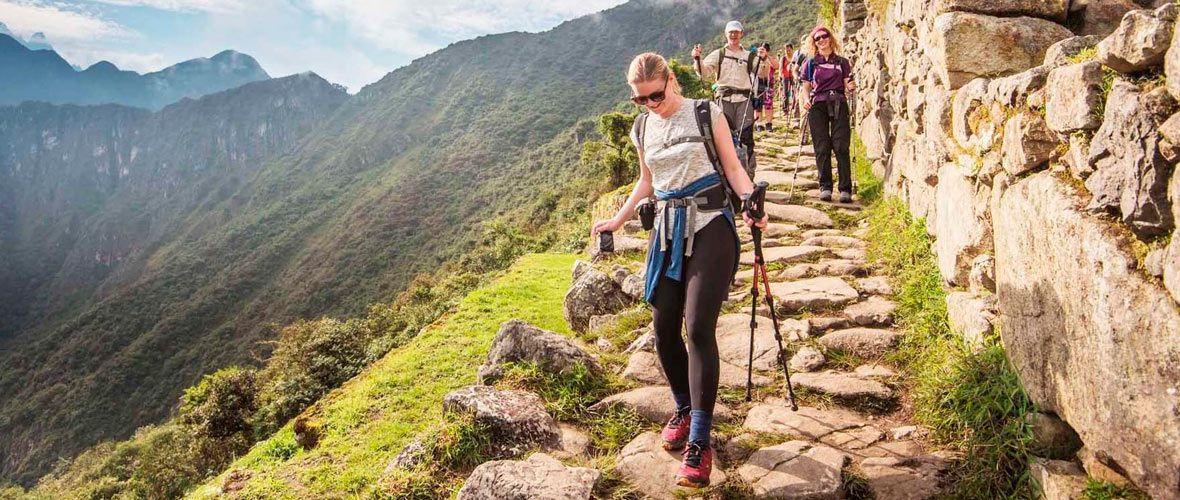
Adjust your backpack so that the load stays stable and close to your body. Shoulder straps should not carry everything; a hip belt helps transfer weight to your hips. Trekking poles are optional but can improve balance and reduce strain during long descents. Practice using them before departure.
What to pack for a day hike
For a day trek, prioritize low weight and easy access. Along with clothing, water and sun protection, carry snacks, a rain shell, a small first-aid kit, headlamp, power bank and waste bag. If delays are possible, add another warm layer and lightweight emergency protection suited to the environment.
Keep frequently used items within reach: water, sunglasses, sunscreen, hat, snacks and rainwear. Place heavier objects centrally and close to your back instead of hanging them outside the pack.

What to add for a multi-day trek
A trek of two or more days requires dry clothing, hygiene supplies and overnight equipment, but first ask your operator what is included. Some trips provide tents, sleeping mats, sleeping bags, meals, porters, pack animals or a duffel with a weight limit. Duplicating that gear only adds unnecessary load.
- A sleeping bag rated for the route and season, if not included.
- Dedicated sleeping clothes protected from moisture.
- Light camp shoes when practical.
- A compact towel, biodegradable toiletries and sufficient medication.
- Additional battery capacity or a realistic plan for electronics.
- Camping and cooking equipment only when your trekking arrangement requires it.
Do not fill a pack merely because space remains. Every extra kilogram becomes noticeable after hours of climbing and descending. Respect weight limits for porters or animals, and keep documents, water, warm layers, medication and valuables with you.

Water and food without unnecessary weight
There is no universal quantity of water suitable for every trek. Needs depend on duration, temperature, effort, altitude, individual factors and safe refill points. Ask whether water will be available and whether you need a filter, purifier or tablets. Never drink directly from a stream merely because it looks clear.
Drink regularly according to thirst and conditions without waiting for severe dehydration or forcing excessive amounts. The CDC notes that both dehydration and excessive water intake can cause health problems. Hydration supports performance, but it does not prevent altitude illness by itself.
Choose compact, easy-to-digest food that you already know: nuts, dried fruit, sandwiches, crackers or energy bars. If your trek includes meals, carry only personal snacks and report allergies or dietary restrictions before leaving.

Safety, navigation and first aid
Download maps for offline use, carry your operator’s contact details and tell someone your route and expected return time. On remote trails, a phone without reception is not an emergency communication system. The technology you need depends on coverage, exposure and technical difficulty.
Your first-aid kit should address personal needs: supplies for minor wounds and blisters, regular medication and sun protection. Do not share prescriptions or take altitude medication without professional advice. If an accident occurs or someone’s condition deteriorates significantly, prioritize calling for help and descending when safe.
Reduce your impact by staying on marked trails, following ranger and community instructions, leaving plants in place and carrying out all waste. These practices match guidance from Sernanp for the Historic Sanctuary of Machupicchu.
Altitude and acclimatization
Many Peruvian treks rise above 2,500 meters. The CDC identifies Cusco and routes such as Salkantay as altitude-illness risk destinations. The most important factor is not an object in your pack but giving your body time to adjust: ascend gradually and keep exercise mild when you first arrive.
Headache accompanied by nausea, dizziness or unusual fatigue can indicate acute mountain sickness. Do not continue ascending with symptoms. Breathlessness at rest, confusion or difficulty walking requires descent and urgent care. If you have a medical condition, a history of altitude illness or questions about preventive medication, consult a clinician before the trip. Read our guide on preparing for a hike above 4,000 meters.
What to pack for popular Peru treks
- Humantay Lake: warm layers, waterproof shell, sun protection, water and grippy footwear; acclimatization matters for the high ascent.
- Rainbow Mountain: predawn insulation, wind protection, gloves, warm hat, UV protection and footwear prepared for mud or ice depending on conditions.
- Inca Trail: confirm permitted luggage, camping gear, sleeping bag and restricted items with your authorized operator. See our Inca Trail guide.
- Salkantay: prepare for high-mountain cold and warmer, wetter sections; protect clothing and electronics.
- Choquequirao: long, demanding days and major elevation changes make low pack weight and foot care especially important.

How to organize your backpack and avoid common mistakes
Place heavy equipment close to your back at mid-height, fill empty space so the load cannot shift and group items in separate bags. Keep rainwear, water, snacks, first aid and sun protection accessible. Test the fully loaded pack before the trip; if it already feels uncomfortable at home, reconsider what you can remove.
Common mistakes include debuting new footwear, ignoring the forecast, carrying too many changes of clothes, relying only on a phone, failing to waterproof clothing and assuming the operator provides everything. Confirm services, pack by systems and complete a final check the day before departure.
The right backpack prepares you for foreseeable conditions without preventing you from enjoying the trail. Use this guide as a base and follow your local guide’s specific advice when conditions require changes.
Sources and update
Prepared on September 24, 2026 from the document “Qué llevar a un trekking en Perú. 1.0,” supplied to GT Peru Travel, and checked against the National Park Service Ten Essentials, CDC altitude guidance and Sernanp recommendations. Images came from the supplied document and were renamed, resized and compressed for the web.
GT Peru Travel editorial team
Adventure and travel · GT Peru Travel · Cusco, Peru
A guide based on the document supplied by GT Peru Travel and checked against official health, hiking and conservation guidance.