Every October, Lima turns purple to honor the Lord of Miracles. This complete guide explains the history of the Cristo Moreno, why October is the purple month, what happens during the procession, what travelers can see and how to visit respectfully.
What is the Lord of Miracles?
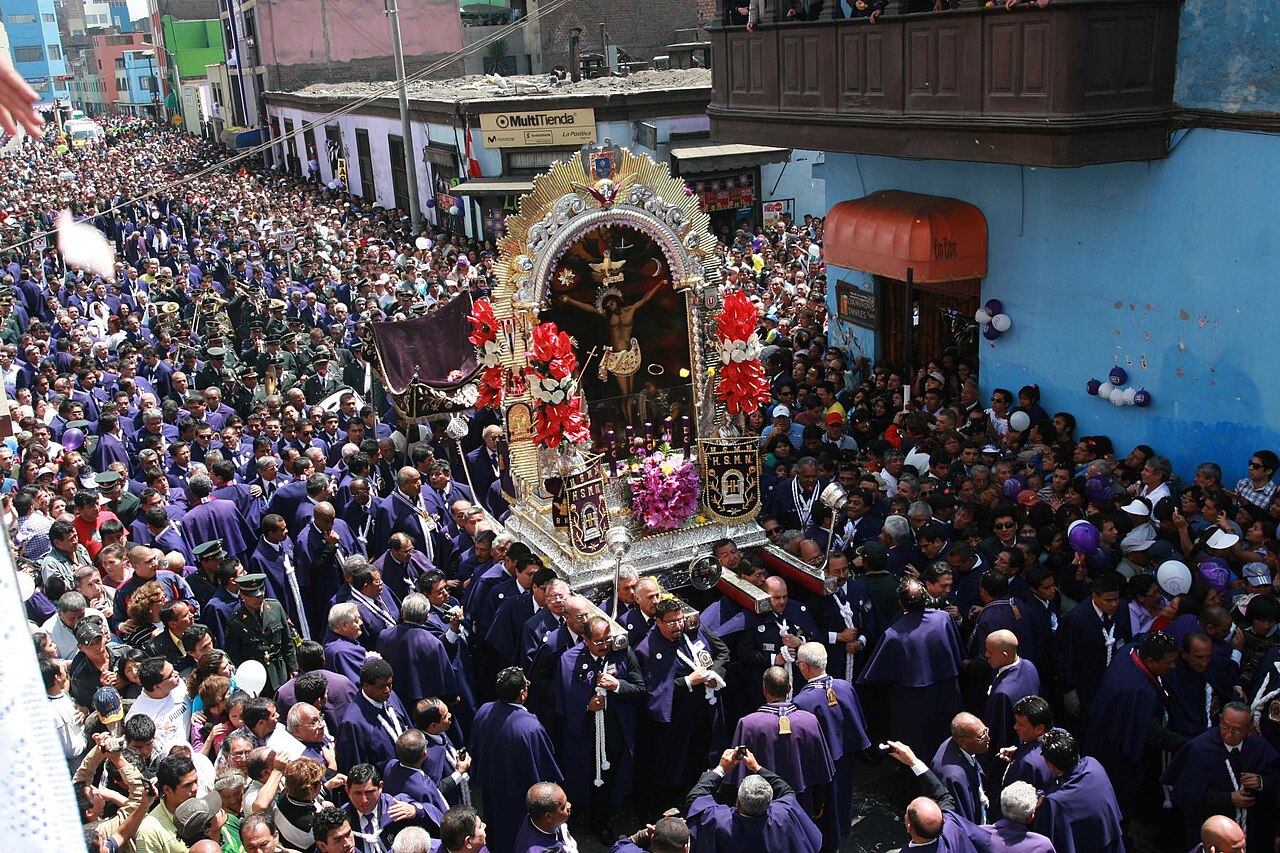
The Lord of Miracles, also called the Cristo Moreno or Christ of Pachacamilla, is a venerated image of Jesus in Lima. The image is carried on a decorated float through the city and the procession is organized by the Brotherhood of the Lord of Miracles of Nazarenas. Cargadores, singers, incense bearers and thousands of devotees all have defined roles in the ceremony.
Why is the procession held in October?
October is linked to the colonial earthquakes that affected Lima and Callao and to the survival of the image on an adobe wall. Over time, the memory of those events turned October into Peru's purple month, a season of prayer, gratitude and pilgrimage.
The National Library of Peru explains that after the 1687 earthquake Sebastián de Antuñano promoted an oil replica and an early procession through Lima.
History of the Cristo de Pachacamilla

The devotion began around a mural painted on an adobe wall in the Pachacamilla neighborhood. In 1671 a mass was celebrated at the site and the image began attracting people from different parts of Lima. According to the tradition, the mural survived the earthquakes of 1655 and 1687. In 1746 another major earthquake reinforced the connection between the image, protection and hope.
In 2005, the Festivity of the Lord of Miracles was declared Cultural Heritage of the Nation, recognizing a living tradition of processions, music, prayers, habits and community organization.
Procession dates and routes
Traditional processions are associated with October 18, 19 and 28, but the official program, routes and schedules are announced every year. Authorities may add dates or change access points, so do not plan from an old calendar.
What to see during the celebration

- The float: the center of the procession, carried by traditional cuadrillas.
- Cargadores: teams take turns carrying the anda.
- Incense bearers and singers: they accompany the route with incense, songs and prayers.
- Purple habits: many devotees wear them as a promise, thanksgiving or expression of faith.
- Flowers and carpets: streets prepare temporary tributes for the image.
What does the purple habit mean?
The purple habit represents a promise, a request, gratitude or remembrance for many devotees. Visitors do not need to wear it; ask permission before taking close portraits and never cross the procession route.
Turrón de Doña Pepa and October flavors
Turrón de Doña Pepa is the best-known sweet of Lima's purple month. It is made with pastry bars, fruit syrup and colorful sprinkles, with different recipes found in bakeries, markets and traditional shops.
Where to experience the tradition in Lima
The Sanctuary of Las Nazarenas in Lima's Historic Center is a central place of devotion. Other districts also hold masses and tributes. Arrive early, choose a safe meeting point and keep an exit route in mind.
Tips for attending the procession
- Check the current official route and schedule.
- Arrive early because streets and public transport become crowded.
- Wear comfortable shoes and carry water and sun protection.
- Keep valuables secure and use a small bag.
- Respect prayer areas, barriers, carriers and emergency teams.
- Plan your return before the procession starts.
- Keep the Historic Center clean and respect churches and monuments.
October is a good time to combine religious tourism with Lima's Historic Center and gastronomy. Book our Lima City Tour or continue to Cusco and Machu Picchu with Peru 360.
Frequently asked questions
When is the Lord of Miracles celebrated?
October is known as the purple month. Main activities and routes are announced every year.
Where is the Sanctuary of Las Nazarenas?
It is located in Lima's Historic Center. Confirm opening hours before visiting.
Can tourists attend?
Yes. Observe respectfully, follow official instructions and do not interrupt acts of faith.
Sources and updates
This guide was checked against the National Library of Peru, the Constitutional Court, PromPerú and institutional announcements.
Frequently asked questions
When is the Lord of Miracles celebrated?
October is the purple month, with dates and routes announced annually.
Can tourists attend the procession?
Yes, as long as they respect the ceremony, devotees and official safety instructions.
GT Peru Travel editorial team
Culture and travel · GT Peru Travel · Lima, Peru
Editorial content based on institutional sources and respectful travel recommendations.