Introduction The traditional markets of Cusco are part of spaces that allow you to discover a different dimension of the city. Further […]

Introduction
The traditional markets of Cusco are part of spaces that allow you to discover a different dimension of the city. Beyond the historical monuments and the main tourist attractions, these places show aspects related to urban life, local customs and commercial activities that continue to play an important role in the daily dynamics of the region.
Through its different markets it is possible to observe how products from various ecosystems of Peru, commercial traditions inherited from previous generations and practices that continue to be part of contemporary Cusco reality coexist. This combination makes the markets points of interest for those who want to better understand the cultural and social context of the ancient capital of the Inca Empire.
In this guide you will learn about the main markets in Cusco, the most representative products that can be found in them, some recommended gastronomic experiences and various aspects that can help you make the most of your visit.
Index
- The importance of markets in the history of Cusco
- San Pedro Market: history, architecture and tradition in the heart of the city
- Wanchaq Market: the main supply center for the people of Cusco
- San Blas Market: local commerce in the most artistic neighborhood of Cusco
- Traditional products that you should know in the Cusco markets
- Market gastronomy: what to try during your visit
- Practical tips for exploring the markets of Cusco
- Discover the local culture of Cusco with GT Peru Travel
- Continue exploring the culture and gastronomy of Cusco
1. The importance of markets in the history of Cusco
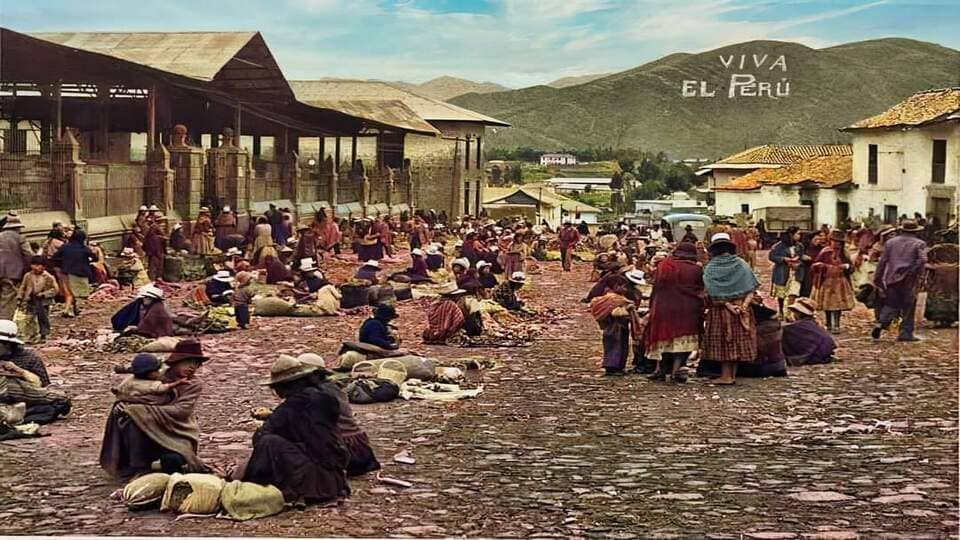
Markets have played a fundamental role in the development of Cusco since pre-Hispanic times. Due to its strategic location within the Andes, the city became an important exchange point between different regions of the Andean territory. Products from the valleys, the high Andean areas and the Amazon regions circulated through trade routes that allowed the supply of populations located in different ecosystems.
During the Inca period, the exchange of goods was part of a complex economic organization based on agricultural production, the redistribution of resources and cooperation between communities. Although the commercial systems of that time were different from current markets, exchange activities played an essential role in guaranteeing access to products from various regions of Tahuantinsuyo.
With the arrival of the colonial period, Cusco experienced important urban and economic transformations. The growth of the city favored the appearance of permanent spaces for the trade of food, textiles and other products of daily use. Over the centuries, these places evolved to become the traditional markets that today are part of Cusco urban life.
Currently, markets continue to play a relevant role in the local economy. In addition to facilitating the supply of food and basic necessities, they constitute spaces where merchants, producers and consumers from different districts and communities in the region interact. This dynamic contributes to the maintenance of economic activities that continue to be important for thousands of Cusco families.
Beyond their commercial function, markets represent spaces where various cultural practices associated with food, agriculture and traditional forms of exchange are kept alive. For this reason, they constitute an important part of the social and cultural heritage of Cusco and allow us to better understand the historical relationship that the city has maintained with its environment and with the communities that surround it.
2. San Pedro Market: history, architecture and tradition in the heart of the city
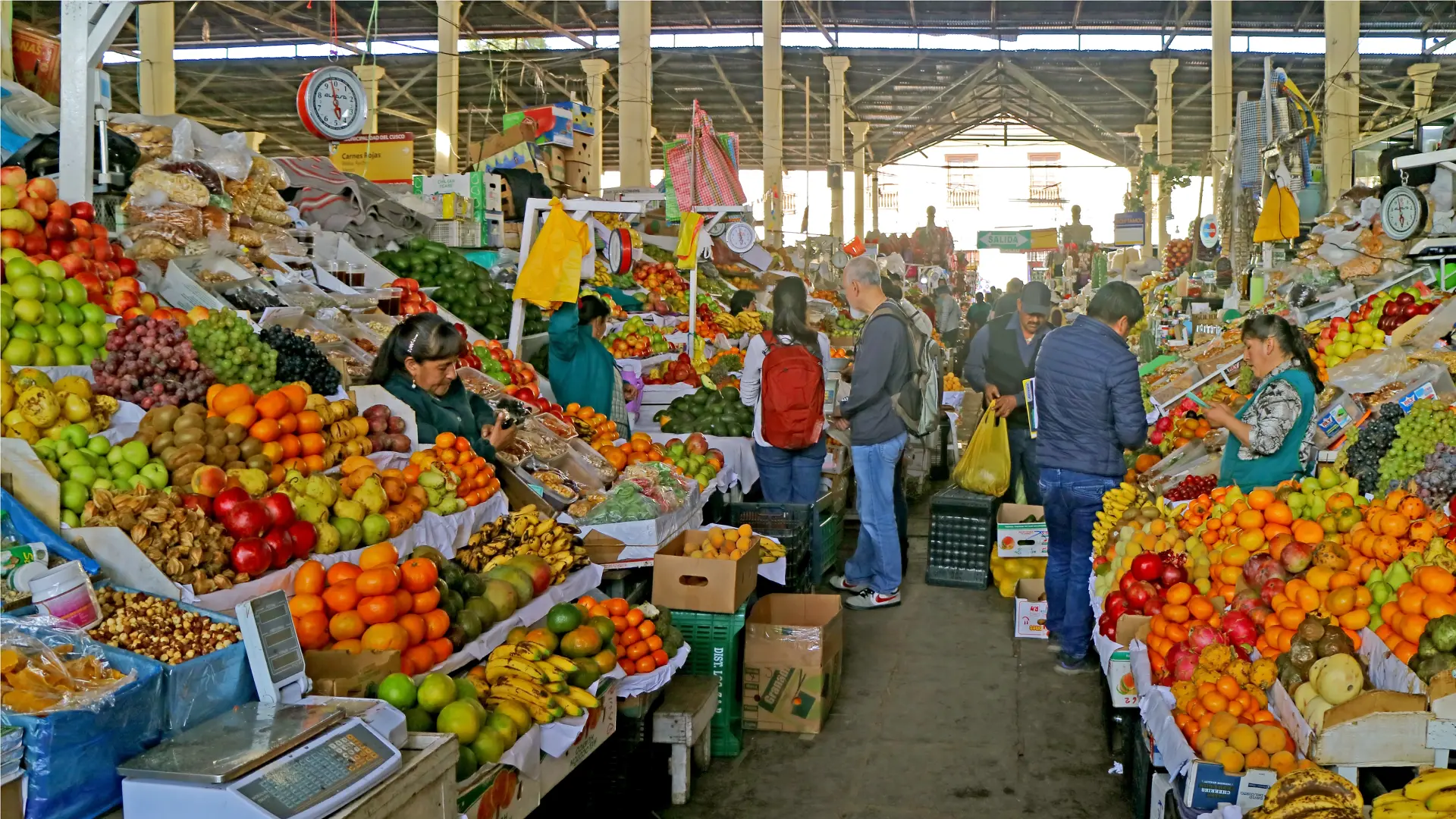
The Central Market of San Pedro is one of the most emblematic commercial spaces in Cusco and one of the most important urban institutions in the city. Located between the historic center and the main commercial areas of Cusco, it has played a fundamental role in the supply of products and local economic activity for more than a century. Its importance transcends the commercial sphere, since it is part of the cultural identity and urban heritage of the ancient capital of the Inca Empire.
The construction of the market took place at the beginning of the 20th century, in a period marked by various urban modernization projects promoted in Cusco. Its metal structure stands out within the architectural landscape of the city and has traditionally been related to the French engineer Gustave Eiffel. However, although this association is widely known, specialists point out that there is no conclusive documentation that confirms their direct participation in the design or construction of the building.
Throughout its history, the San Pedro Market has functioned as a connection point between rural producers and urban consumers. Thanks to its strategic location, merchants from different provinces of Cusco have used this space to distribute goods and supply the local population. This function has contributed to the economic development of the city and has strengthened commercial links between different areas of the region.
In addition to its economic importance, the market constitutes a space where aspects related to the social dynamics of Cusco can be observed. The constant interaction between merchants, producers and buyers reflects a daily activity that has remained in force for generations. This continuity makes the San Pedro Market a place of great interest for those who wish to better understand the urban and commercial evolution of the city.
Today, the San Pedro Market continues to be one of the most visited places in Cusco. Its historical, architectural and cultural relevance has made it a point of reference for both the local population and visitors who seek to discover a different dimension of the city, beyond its historical monuments and archaeological attractions.
Its permanence over time demonstrates the importance that traditional markets continue to have in Cusco urban life and explains why it continues to be considered one of the most representative spaces in the city.
3. Wanchaq Market: the main supply center for the people of Cusco

The Wanchaq Market is one of the most important shopping centers in Cusco and plays an essential role in the city's daily supply. Located in the Wanchaq district, one of the areas with the greatest economic and residential activity, this market has established itself as a strategic point for the distribution of food and basic necessities intended mainly for the local population.
Unlike the San Pedro Market, which combines commercial functions with a significant influx of visitors, the Wanchaq Market maintains a dynamic more oriented towards the daily needs of the people of Cusco. Merchants, families, small businesses and gastronomic establishments come to its facilities daily to purchase products for daily consumption and supply. This characteristic allows us to observe a different facet of the city's economic functioning.
The market also plays a relevant role in the commercial relationship between rural and urban areas of the region. Numerous producers from different provinces of Cusco market their products through the distribution chains that supply this shopping center. Thanks to this connection, the Wanchaq Market contributes to the strengthening of the regional economy and facilitates the urban population's access to products from various agricultural areas of the department.
The urban growth experienced by Cusco during the last decades has further increased the importance of this market. Its location allows relatively easy access from different sectors of the city, making it one of the main supply points for thousands of residents. This function has consolidated its role within the commercial infrastructure of the historic capital of Peru.
For those who want to better understand the daily dynamics of Cusco, the Wanchaq Market offers a different perspective than that provided by the main tourist attractions. More than a visitor-oriented space, it represents an active part of the city's daily life and reflects the importance that traditional markets continue to have within the economic and social development of Andean cities.
Currently, the Wanchaq Market continues to be one of the main references of local commerce and an example of how traditional markets continue to adapt to the needs of a constantly growing city, without losing their fundamental role within the regional economy.
4. San Blas Market: local commerce in the most artistic neighborhood of Cusco

Located in one of the most traditional neighborhoods of the city, the San Blas Market is part of the daily dynamics of an area recognized for its cultural, historical and artistic wealth. Unlike other larger markets, this space maintains a smaller scale and a close relationship with the daily life of the neighborhood's residents, becoming a meeting point for those who live and work in this historic sector of Cusco.
The San Blas neighborhood has a long tradition linked to artisanal production. Since colonial times, numerous artists, artisans and workshops have established themselves in its streets, contributing to the cultural identity that currently characterizes this area of the city. Within this context, the market fulfills a complementary function to the commercial and social activity that takes place in the neighborhood, forming part of a network of small businesses that continue to meet the needs of the local population.
One of the characteristics that differentiates the San Blas Market from other shopping centers in the city is its direct relationship with the urban environment where it is located. While San Pedro and Wanchaq play broader roles within the supply of Cusco, this market mainly reflects the dynamics of one of the most emblematic neighborhoods of the historic center. Its daily activity allows us to observe a closer and more local dimension of the city.
The location of the market is also especially interesting for visitors visiting San Blas. After exploring its cobblestone streets, craft workshops, art galleries and cultural spaces, many travelers find in this area an opportunity to better understand how tourist activity and daily life coexist within one of the most representative sectors of Cusco.
Beyond its commercial function, the San Blas Market is part of the urban and social heritage of the neighborhood. Its presence contributes to maintaining local economic activity and strengthens the community character that has historically distinguished this area of the city. Although it often receives less attention than other larger markets, it continues to play an important role within the historic district's identity.
For those looking to discover a different facet of Cusco, the San Blas Market offers an opportunity to observe the interaction between tradition, community and economic activity in one of the neighborhoods with the greatest cultural value of the ancient capital of the Inca Empire.
5. The traditional products that you should know in the Cusco markets
One of the greatest riches of the Cusco markets is the diversity of products that reflect the extraordinary geographical and agricultural variety of Peru. Thanks to the connection between the Andean regions, the inter-Andean valleys and the Amazon, these spaces bring together foods and ingredients that are part of the local gastronomy and food traditions developed for centuries in different communities in the region.
Among the most representative products are native potatoes. Peru is internationally recognized as the center of origin of the potato and is home to thousands of varieties grown in different ecological zones. In Cusco markets it is possible to find specimens of various colors, shapes and sizes, many of which continue to be cultivated by small agricultural communities that preserve traditional production techniques. These varieties are an essential part of Andean cuisine and constitute one of the country's greatest agricultural heritage.

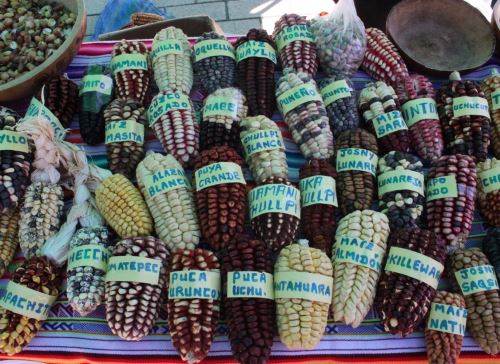
Another emblematic product is Andean corn. Cusco has a long tradition linked to this crop, especially to the giant white corn produced in the Sacred Valley of the Incas. Recognized for the large size of its grains, this product even has a designation of origin and occupies an important place in the regional diet. In addition to white corn, markets offer other varieties used in different traditional preparations.
Quinoa also occupies a prominent place within the regional agricultural offer. This Andean grain has been cultivated for thousands of years in different areas of the highlands and is currently valued for its nutritional properties. Its growing international recognition has contributed to increasing interest in learning about the traditional agricultural systems that allowed its development in high altitude environments.

The Cusco markets also bring together a wide variety of artisanal cheeses made in different provinces of the region. These products are part of the daily diet of many families and reflect the importance of livestock activity within rural economies. Its presence demonstrates how local production continues to play an important role in supplying the city.
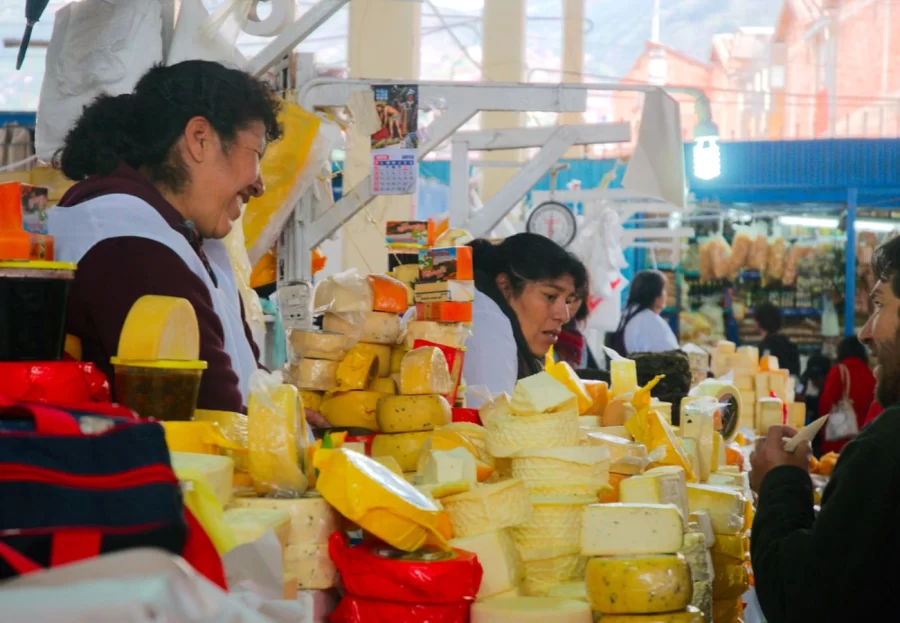
Another characteristic element is the commercialization of medicinal plants and herbs traditionally used by Andean communities. Various plant species continue to be used in practices related to well-being and traditional medicine. Although many of these plants have a long history of use in the region, it is important to remember that any therapeutic application must be evaluated by health professionals.

Finally, the markets offer a notable diversity of fruits from the Peruvian Amazon. Thanks to the commercial connections between Cusco and the jungle regions, it is possible to find products that are difficult to find in other parts of the world. This combination of Andean and Amazonian ingredients turns the Cusco markets into spaces where you can appreciate the enormous biological and cultural diversity that characterizes Peru.

Knowing these products allows us to better understand the agricultural wealth of the Andes and the importance that markets continue to have as spaces for exchange, conservation and dissemination of foods that are part of the Peruvian gastronomic identity.
6. Market gastronomy: what to try during your visit
In addition to their commercial and cultural importance, Cusco's markets are some of the best places to discover the city's daily cuisine. Unlike tourism-oriented restaurants, these spaces allow you to observe and taste preparations that are part of the daily diet of thousands of Cusco residents. For many travelers, visiting a market represents an opportunity to discover traditional flavors and approach local cuisine from a more authentic perspective.
One of the most popular products are natural juices prepared at the moment. The specialized stalls offer a wide variety of combinations made with fruits from both the Andes and the Peruvian Amazon. Due to the diversity of ingredients available, visitors can find options that include papaya, pineapple, mango, passion fruit, passion fruit, prickly pear and other regional fruits little known outside the country.
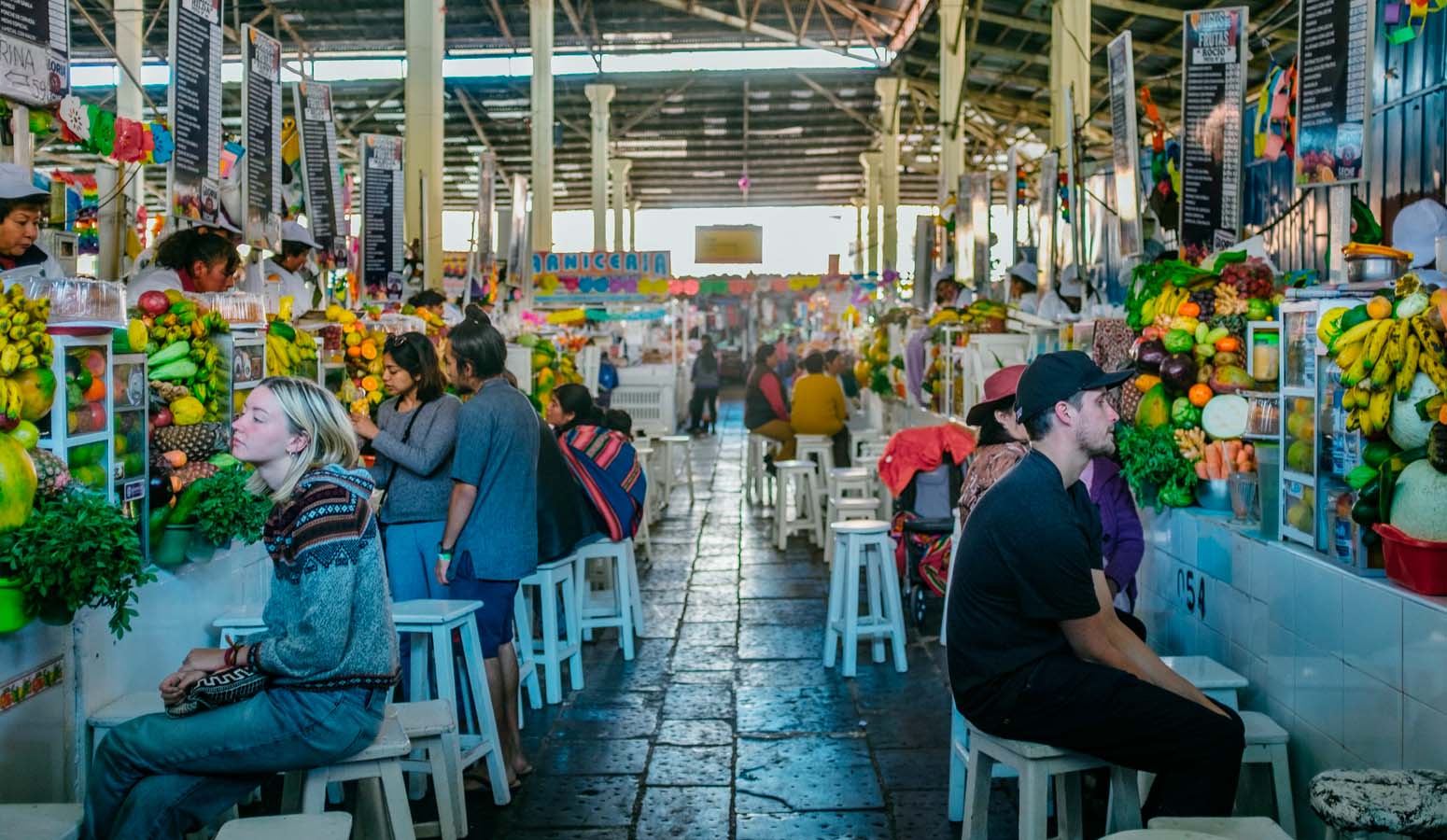
Traditional breakfasts also occupy an important place within the gastronomic offer of the markets. Among the most common options are tamales, prepared with corn dough and cooked wrapped in vegetable leaves. This food, widely consumed in different regions of Peru, is usually accompanied with hot drinks and is one of the preferred alternatives for those looking to start the day with a traditional preparation.
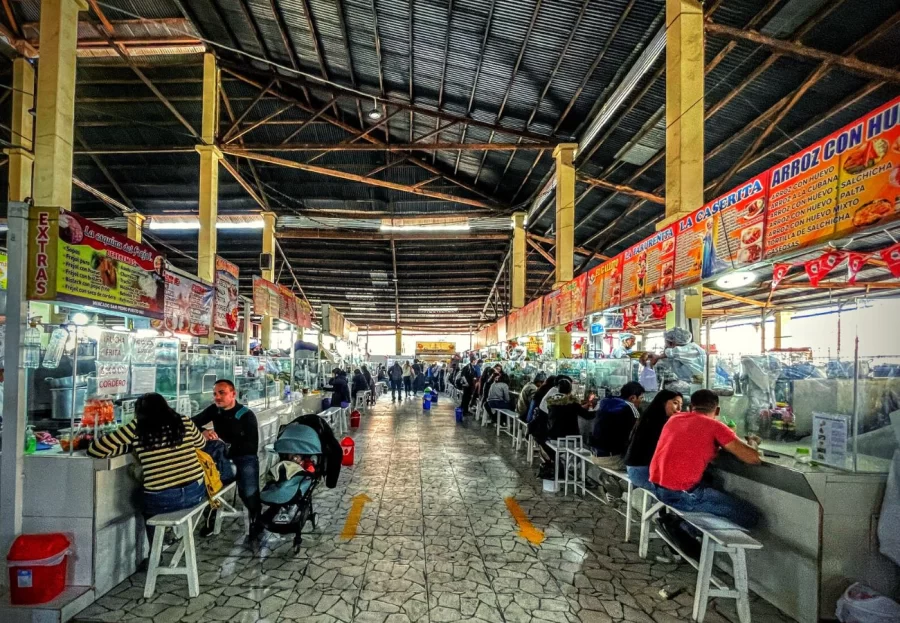
Another common specialty is chicken broth, a very popular dish in Peruvian cuisine. Made from a concentrated broth accompanied by noodles, egg and chicken meat, it is a preparation that is usually consumed during the first hours of the day and continues to be one of the most requested options in numerous markets in the country.
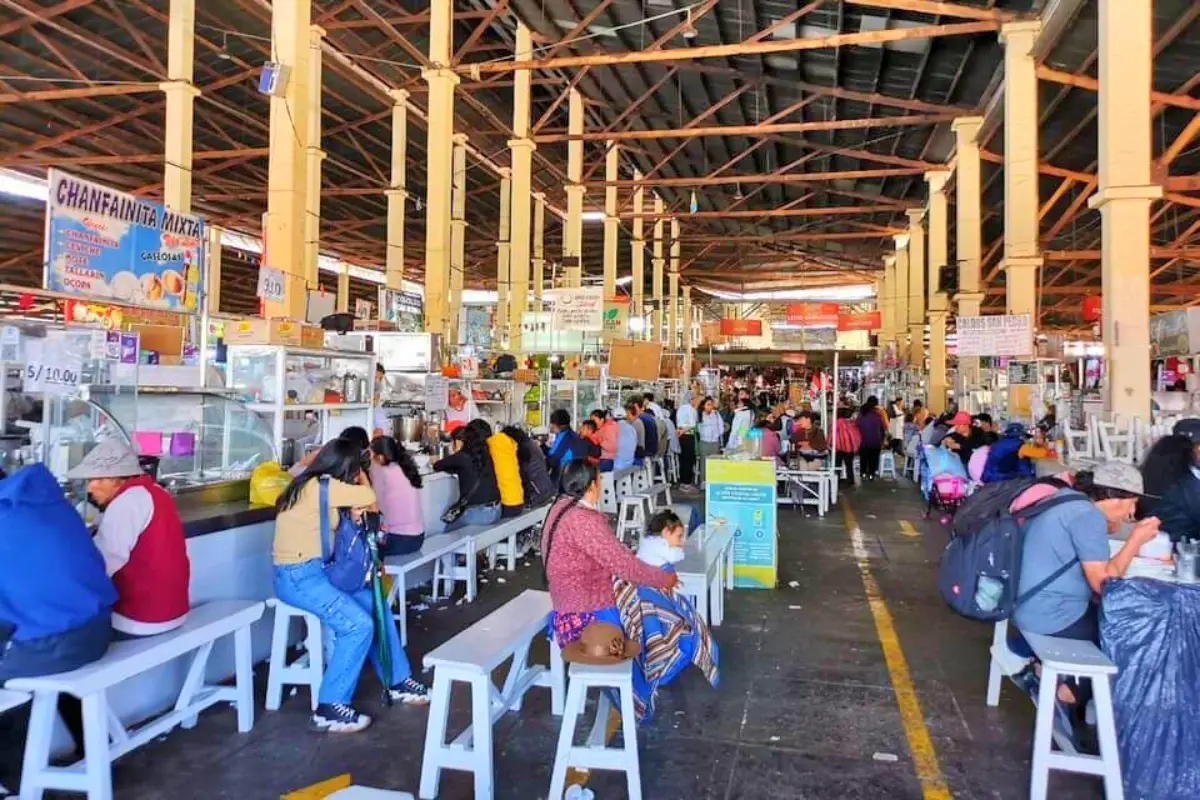
Visitors can also find different types of traditional breads, empanadas and other baked preparations that are part of the region's daily diet. Many of these products are made daily by small local producers and bakeries, helping to maintain gastronomic practices passed down through generations.
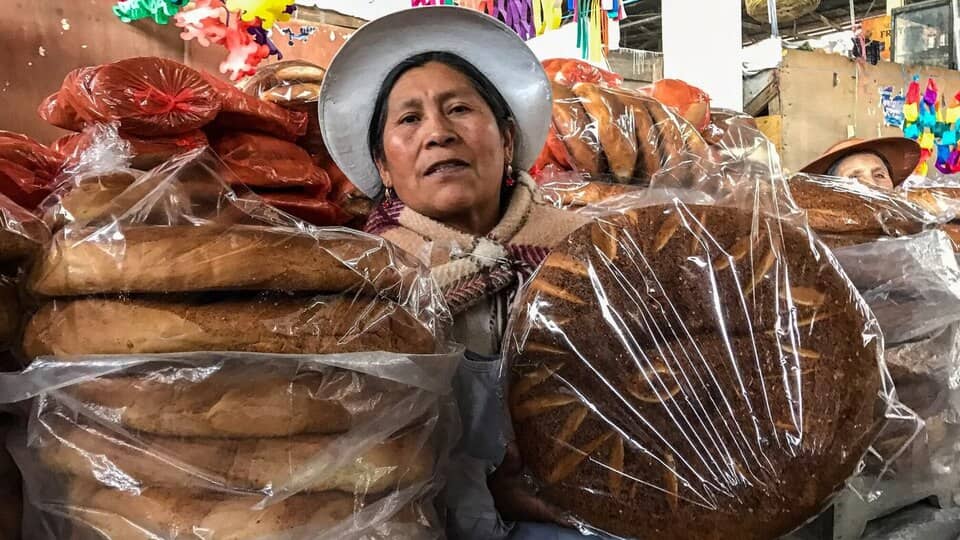
For those who want to explore popular Cusco cuisine, the markets also offer various homemade food options prepared with characteristic ingredients of the region. These proposals allow you to discover traditional recipes that continue to be part of the daily diet and offer a different vision of Peruvian gastronomy beyond the internationally known dishes.
As in any tourist destination, it is advisable to choose establishments that maintain adequate hygiene conditions and a high customer turnover. In this way, visitors can enjoy with greater peace of mind a gastronomic experience that constitutes an important part of Cusco's cultural identity.
More than just places to eat, markets represent spaces where gastronomy continues to connect tradition, history and daily life. Therefore, trying some of its specialties can become one of the most interesting experiences for those who want to get to know the city from a closer and more authentic perspective.
7. Practical tips for exploring the markets of Cusco
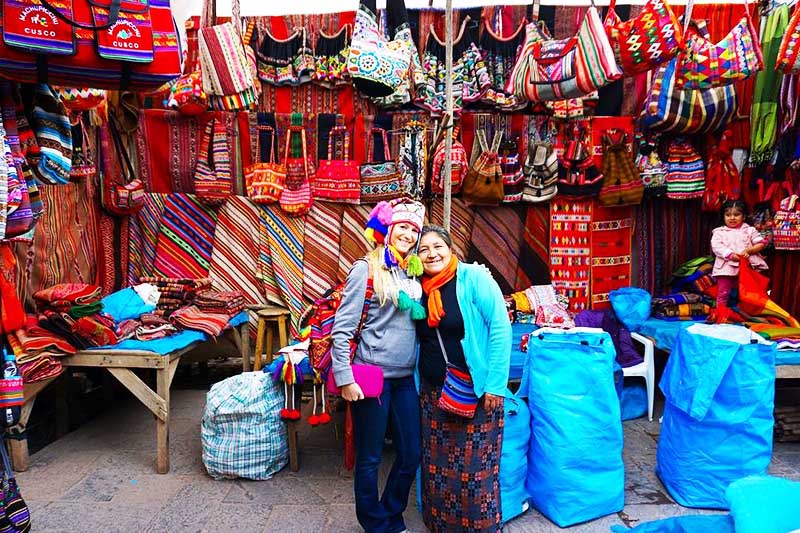
Visiting the traditional markets of Cusco can become a very enriching experience for those who want to know aspects of daily life in the city. However, as is the case in any market with great commercial activity, it is advisable to take into account some considerations that will allow you to better enjoy your visit and make the most of everything that these spaces offer.
One of the most important aspects is the schedule. The greatest activity is usually concentrated during the early hours of the morning, when merchants receive fresh products and residents do their daily shopping. Visiting the markets early allows you to observe a more active dynamic and access a greater variety of available products.
It is also advisable to walk through the markets calmly and spend time observing the different sectors. Many visitors focus only on the most visible areas, but exploring the different hallways allows you to better understand the diversity of activities that take place within these spaces and appreciate the variety of products and services they offer.
For those wishing to make purchases, it is advisable to carry cash in local currency, as some merchants may not accept electronic means of payment. Likewise, it is advisable to check prices before making a purchase and maintain a respectful attitude during any negotiation process, remembering that markets are part of the daily economic activity of many families.
Photography is another aspect that deserves attention. Although many merchants have no problem being photographed, it is always advisable to ask permission before taking images of people or their jobs. This gesture demonstrates respect for the local population and encourages a more positive interaction with merchants.
In terms of security, the markets of Cusco usually receive a large number of people daily. As in any busy space, it is advisable to be careful with personal belongings and pay attention to belongings during the tour. These basic measures allow you to enjoy the visit with greater peace of mind.
Finally, it is important to remember that markets are work and supply spaces for the local population. Maintaining a respectful attitude towards merchants, customers and the rules of the place contributes to generating a more pleasant experience for both visitors and those who carry out their daily activities in these spaces.
Touring the traditional markets of Cusco not only allows you to discover local products and gastronomy. It also offers the opportunity to better understand the social, economic and cultural dynamics of a city where commercial traditions continue to be part of daily life.
8. Discover the local culture of Cusco with GT Peru Travel
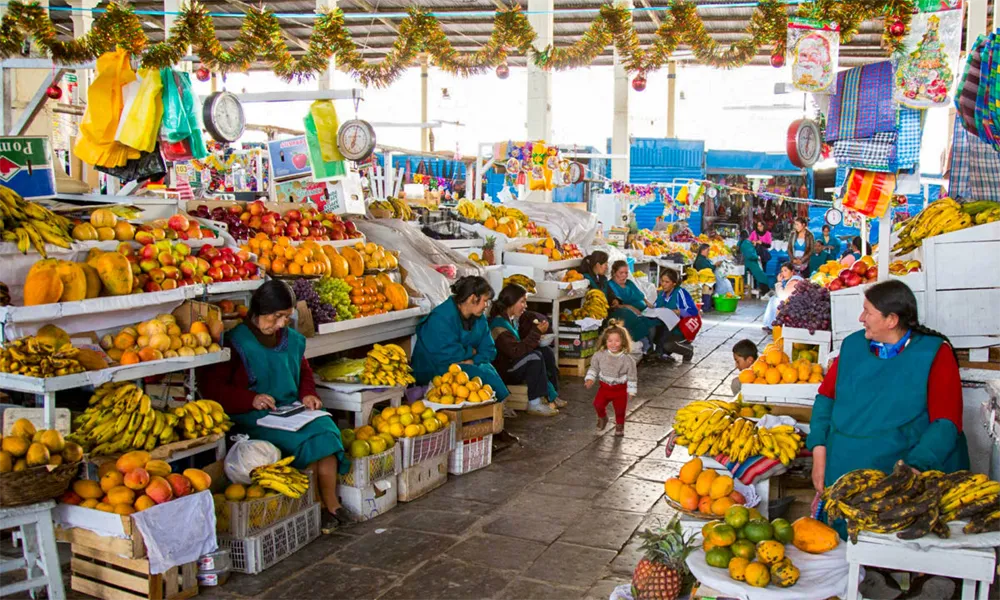
Traditional markets represent one of the best opportunities to learn about the daily life of Cusco and understand aspects of local culture that often go unnoticed during conventional tourist tours. Through its commercial spaces, its products and its gastronomic expressions, it is possible to approach a broader dimension of the city and better understand the relationship that exists between the Andean communities, agriculture, commerce and the traditions that remain in force today.
Visiting the markets can perfectly complement other cultural and historical tours within the region. Places like the Historic Center from Cusco, the San Blas neighborhood, the Sacred Valley of the Incas or diverse Andean communities allow us to expand our understanding of the cultural wealth that characterizes the ancient capital of the Inca Empire. In this way, the trip is not limited only to the observation of monuments and archaeological sites, but also incorporates experiences related to daily life and the living cultural heritage of the region.
For those who want to obtain a more complete vision of Cusco, combining historical attractions, Andean landscapes, traditional gastronomy and cultural experiences is one of the most recommended ways to get to know the destination. This diversity of experiences allows us to understand why the city continues to be one of the main cultural centers in South America and one of the most important destinations in Peru.
GT Peru Travel develops programs and experiences that allow you to discover different dimensions of Cusco, integrating historical heritage, nature, culture and local traditions. This approach facilitates a broader approach to the destination and helps visitors better understand the diversity that characterizes the Andean region.
Getting to know the traditional markets is, in many cases, the first step to discovering a city that goes far beyond its best-known monuments. They are spaces where culture remains active, where customs continue to be transmitted between generations and where it is still possible to observe an important part of the identity that has shaped Cusco over the centuries.
9. Continue discovering the local culture of Cusco
Traditional markets are an important part of Cusco's cultural identity and offer a different perspective of the city. Beyond the main tourist attractions, these spaces allow you to learn about aspects related to gastronomy, local customs and activities that are part of the daily life of thousands of Cusco residents.
Visit markets like Saint Peter, Wanchaq and Saint Blaise It allows us to better understand the cultural diversity of the region and the close relationship that exists between the Andean communities, agriculture and the traditions that remain in force today. For this reason, your visit can significantly complement any itinerary through the ancient capital of the Inca Empire.
If you are planning your trip to Cusco and want to combine history, culture, gastronomy and authentic experiences, GT Peru Travel offers different programs and tours designed to discover the main attractions of the region from a more complete and enriching perspective.
Getting to know Cusco is not just about visiting monuments or archaeological sites. It also means getting closer to its traditions, its flavors and the spaces where culture continues to be part of daily life. Traditional markets represent an excellent opportunity to begin that discovery.
Brishet Valle
Author · GT Peru Travel · Cusco, Peru
Content prepared by the GT Peru Travel team to help you plan a safe and authentic experience in Peru.